
Amir Gizyatov: «First and foremost, my main support is my family»
28.02.2026
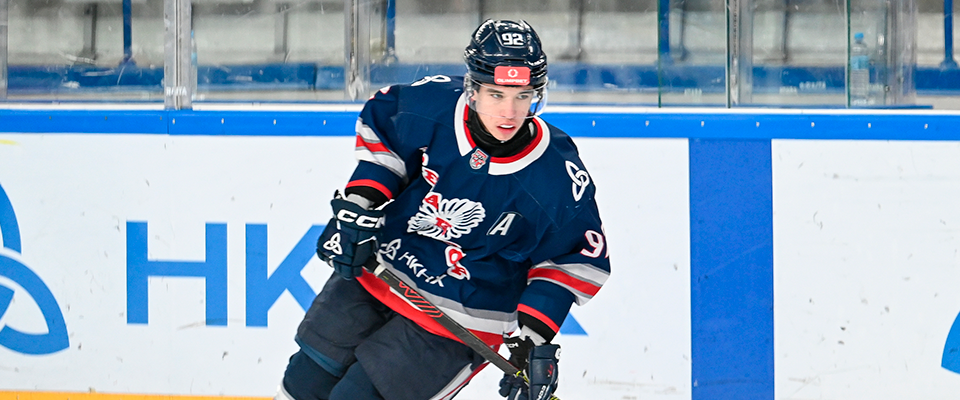
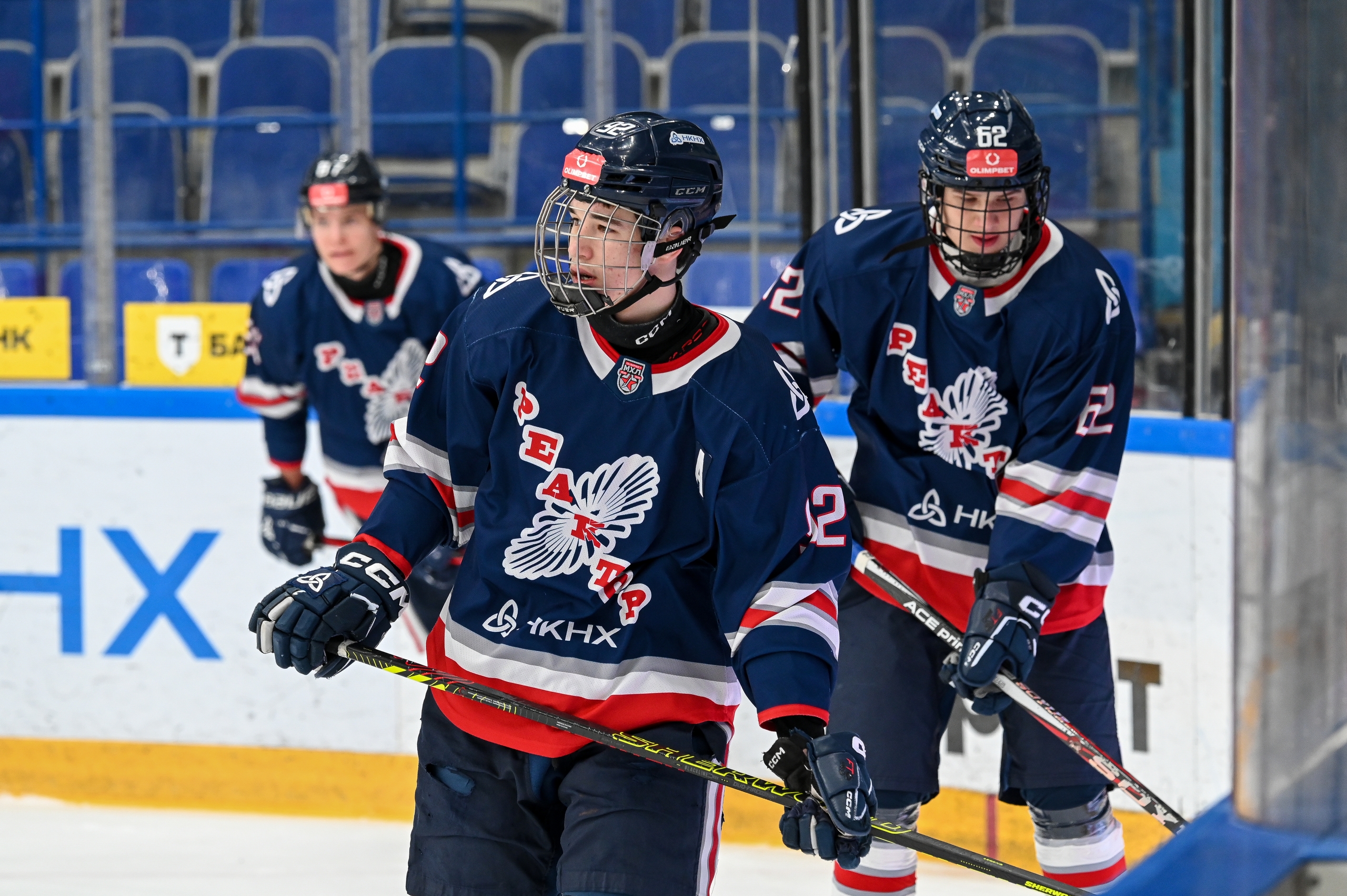
Reaktor forward Amir Gizyatov speaks talks about his three JHL seasons.
– You're playing your third JHL season, and you're only 18. We can say that you are already a veteran, but still young. How did that happen?– It just so happens that by JHL standards, I joined the league very early, at 16. So, I'm 18 now, and I've already played almost three seasons.
– Statistically, your average on ice time increases each season, which speaks both to the coaching staff's trust and to your progress. Do you feel like you've become an important part of the team?
– Well, first of all, I want to thank the coaching staff for trusting me with on ice time. About my role on the team, I want to be a player who's willing to take on responsibility. That's why I'm trying to give my best on the ice with each game. This season, I've started playing more and more on the power play and penalty kill. And I'm trying to justify the coaches' trust more and more with each game.
– Your points count is close to 100, and you've played almost 150 games in the league. Do you remember your first game in the JHL and your first goal?
– Yes, I do. We were playing against Tyumensky Legion; it was my first game. I could have scored my first goals then: I went out on a 2–on–1, and I started shaking all over and couldn't shoot properly. Then, for about six more games, I couldn't pass or score, and I started to get worried. We had a long road trip next, playing against Tolpar. I got the first assist for Kirill Stolyarov. We were losing, and our young line was trying to tie the game up. At the end of the game, I managed to push the puck in. At first, they didn't even want to count it. I was a little disappointed. But then, when the referee showed it was a good goal, I was happy. That puck is still sitting on my shelf.
– What do you usually do on long trips? What do you watch or read?
– On my last trip, I started taking sudoku and crossword puzzles with me. Otherwise, I mostly watch TV and hang out with the team. In other cities, I always walk around and see the sights whenever possible; I usually try to spend less time in hotels.
– You were talking about your passion for motorcycles and your dream of buying a new one. Did you manage to fulfill it?
– I'm passionate about motorcycles. I first rode a motorcycle with some friends from my village. When I was 16 or 17, I wanted something more powerful, faster, and last year I realized my dream and bought myself a mountain bike. I ride it around the fields.
– Who do you usually live with when you're on the road?
– Well, before that, I always lived with Seva Sokolov, my friend. Now I live with Vlad Rukhlyadev, also a close friend.
– Your close friend Sevastyan Sokolov made his KHL debut this season and was recently named MVP. How do you support him?
– Honestly, I don't understand how he got into the KHL at all. He was always losing at School No. 31. No, I'm joking, of course. I'm genuinely happy for him that he's in the KHL. At the beginning of the season, he went to the VHL and talked about it. I was curious, so I asked him what the situation was like in adult hockey. We're always trying to keep in touch.
– You've already mentioned that Sergei Rasikhovich Kasymov played a key role in your hockey career. Now he's on Reaktor team. Is there something symbolic about this for you?
– Actually, Sergei Rasikhovich and I met a long time ago. Back then, I was playing for the night league with my father. That's where we met, and he started pushing me, showing me things. Then, unexpectedly, he started coaching the 2006 team at the Neftekhimik Hockey School. Sergei Kasymov loves hockey and is passionate about it. And I became even more passionate about it watching him. Then, when I left for Reaktor, we were always in touch.
He always helped me, giving me advice not only on hockey, but also on physical and mental development. Then, a year later, we were told that the team would soon have a new coach. We all wondered, Rukha, Sokol, and I wondered who it could be. Then, at training camp, during the first practice, we saw a familiar gait, a familiar bag. Of course, we were all grinning from ear to ear. He's the kind of guy who demands 100%.
– What kind of music do you usually listen to?
– I'm not a music fan; I like regular, calm music. I'm not particularly into the artists who are currently popular. For instanse,I like Basta.
– How do you usually spend your game day? Do you have a set routine?
– Before a game, I try to go to bed early to get enough sleep, about 8-9 o'clock, because I have an early warm-up in the morning. Afterward, I always have breakfast; I consider it the most important meal of the day. I arrive at the arena, we have a warm-up, video analysis, and then lunch. After that, I either walk or take the bus home. And I always need at least two hours of sleep before the game. Usually, before the game, I stop by the store, grab a chocolate bar and some sweet soda to wake me up. After that, I head to the arena. I always warm up with my stick, because if I don't warm up my wrists, I do not feel comfortable. Then comes the team warm-up. I don't have any special rituals. Only small things – I put everything on the right foot first. It's important for me to have a good warm-up; under those circumstances, I'll feel good.
– Who usually cheers you on in the stands during home games, and is personal support important to you?
– Yes, of course it is. First and foremost, my main support is my family. They've been coming to my games since I was a kid, and they still do. They'll always be honest, even if I played poorly. They'll tell me straight out what they didn't like, that I didn't work hard enough, or didn't run hard enough. My grandparents also support me. I really appreciate that.
– If you have a bad game, how do you cope and process it?
– Maybe to be alone, take a walk, go to bed early if I really didn't like the game or lost badly. And if it's not that serious, it's usually best to meet with Seva and talk; it makes it easier to process the bad moments.
– Do you have a signature move or trick that you excel at? And what do you consider your strength? What would you like to improve?
– Because I'm small, I'm quite agile and quick. So I try to apply these qualities on the ice. There are a lot of big players now, but they're often slow. I'm also trying to develop my passing and playmaking skills, so that in moments where players get lost and miss me, I try to make quick, good passes. And I also try to score on every scoring opportunity I have.
– What do you think is the most important thing for a good hockey player?
– Physicality, game thinking and hard work are quite important. A good hockey player should have all of these things. The combination of these things does the job; it's impossible to single out just one. If you have the game's mentality but no physicality, you won't be able to escape or collide with someone. But if you have the physicality but no mentality, then, as they say, "you've got the strength, you don't need the brains." You can't play hockey without that.
– What's your immediate hockey goal?
– Overall, team goals are the priority right now. I really want to get to the play-in tournament and then advance from there. I want to play in the knockout rounds and compete for the cup. But individually, I want to get a taste of adult life and adult hockey as soon as possible. I want to move to the next locker room with Seva, get established there, and then play together again.